
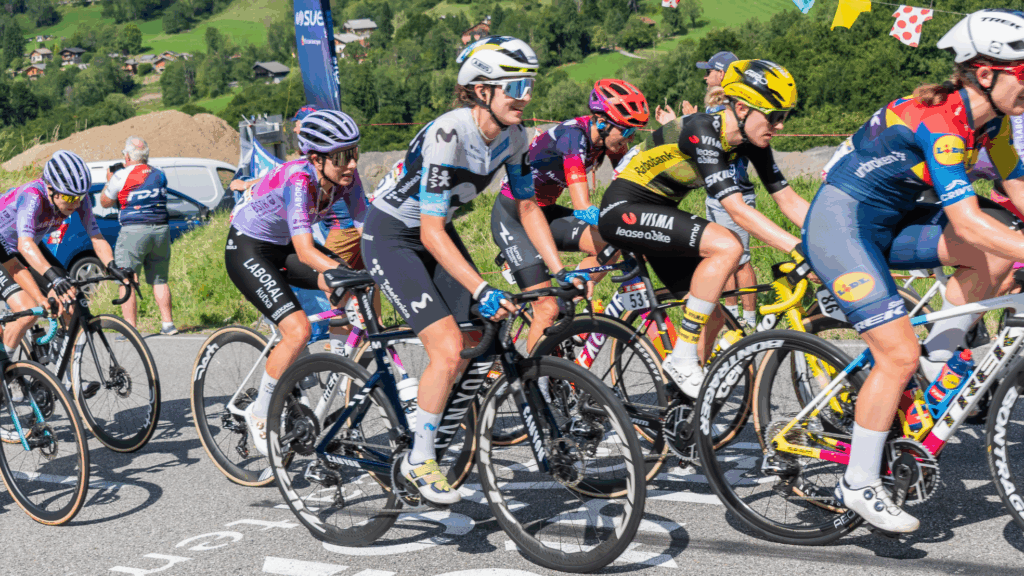
The Tour de France has long stood as one of France’s greatest cultural and sporting legacies.
First held in 1903, the race was conceived by journalist Henri Desgrange as a way to boost readership for the newspaper L’Auto. The inaugural event covered six stages and over 2,400 kilometers, and was won by Maurice Garin with a commanding lead of nearly three hours – the largest margin in Tour history.
From those early days, the Tour has grown into a defining international sporting event, a spectacle that combines endurance, strategy, and the dramatic beauty of France’s landscapes. Except for interruptions during the World Wars, the Tour has been held annually for more than a century, cementing its role as a touchstone of French national identity and global sporting culture.
The 112th edition of the Tour de France took place from July 5 to July 27, 2025, beginning in the northern city of Lille and culminating, as tradition holds, on the Champs-Élysées in Paris.
Over three weeks, riders faced 21 stages and 3,302 kilometers of racing, with punishing climbs that added more than 52,500 meters of elevation gain. The 2025 route offered both spectacle and innovation: the peloton tackled summit finishes on legendary climbs like Mont Ventoux, Hautacam, La Plagne, and Col de la Loze, and for the first time the Parisian finale included challenging circuits through Montmartre. The result was a race that both honored tradition and embraced change, underscoring the Tour’s enduring dynamism.
This year’s Tour was dominated by Tadej Pogačar, the Slovenian rider for UAE Team Emirates – XRG, who secured his fourth overall title after previous victories in 2020, 2021, and 2024. Pogačar completed the race in 73 hours, 54 minutes, and 59 seconds, finishing 4 minutes and 24 seconds ahead of his longtime rival Jonas Vingegaard of Visma–Lease a Bike. Germany’s Florian Lipowitz rounded out the podium in third place and also claimed the white jersey as best young rider.
Pogačar’s dominance was evident not only in his overall consistency but also in his ability to seize key moments, including a dramatic victory on Stage 4 in Rouen, where he earned his 100th career win, and decisive performances on the high-mountain stages and the uphill individual time trial at Peyragudes.
The classification jerseys reflected both familiar champions and new faces. Pogačar himself added the polka-dot jersey as the best climber to his accolades, while Jonathan Milan captured the green jersey as the Tour’s fastest sprinter. Young German rider Lipowitz took the white jersey, confirming him as one of cycling’s rising stars.
Beyond the standings, the Tour also offered unforgettable stage moments: Thymen Arensman of Lidl–Trek secured multiple mountain victories, Kaden Groves showcased sprinters’ strength on Stage 20, and Wout van Aert capped the Tour with a dramatic solo win in the rain-soaked Montmartre finale, where overall times were neutralized for rider safety.
The Tour de France has always been about more than standings and statistics – it is a living story told across the roads, mountains, and towns of France.
This year’s narrative included an impressive fourth-place finish by Britain’s Oscar Onley, a memorable combativity award for Ireland’s Ben Healy, and a heartwarming moment when American rider Quinn Simmons proposed to his partner on the Champs-Élysées after the race concluded.
These stories, alongside the fierce competition, reminded audiences why the Tour remains not only a sporting event but also a celebration of perseverance, artistry, and humanity.
For French and American audiences alike, the Tour de France serves as a cultural bridge. French heritage and landscapes are showcased on a global stage, while American riders and fans continue to find their place in the Tour’s unfolding drama.
In 2025, as Pogačar etched his name deeper into cycling history and the peloton raced through fields, mountains, and city streets, the Tour once again demonstrated its ability to unite nations through sport, spectacle, and shared admiration for the pursuit of excellence.