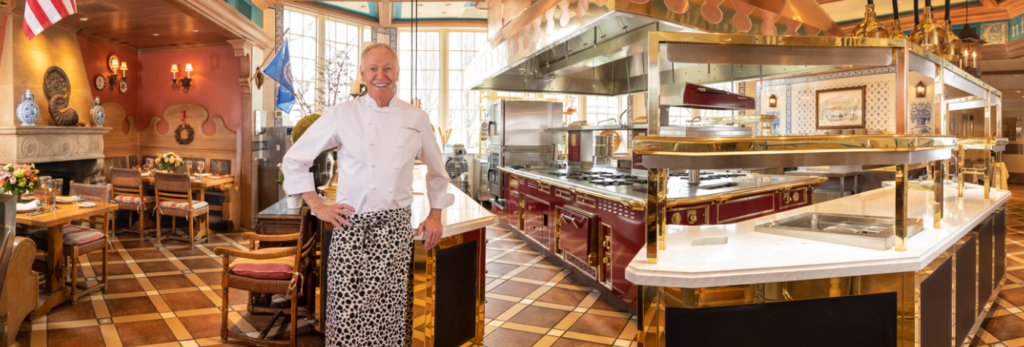
Patrick O’Connell: A Life Shaped by Place, Hospitality, and the French Art of Cuisine
The pioneering chef behind The Inn at Little Washington, author of the new memoir Main, Middle & Gay, and 2026 Lafayette-Washington Award for Cultural Diplomacy recipient has spent nearly five decades creating a culinary language that bridges French tradition and American imagination.
There is something wonderfully improbable about Patrick O’Connell’s story.
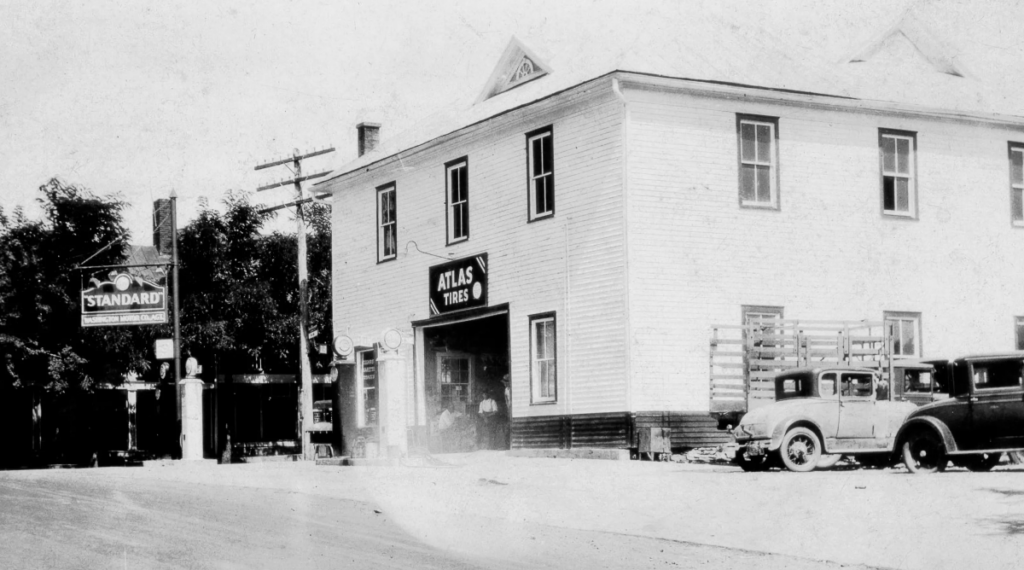
In 1978, in the tiny Virginia village of Washington, O’Connell opened a restaurant in a former garage. He had no formal culinary training. The town had little in the way of a restaurant infrastructure, and local sourcing was less a philosophy than a necessity: virtually nothing was delivered there.
Yet from those unlikely beginnings emerged The Inn at Little Washington, a destination that would eventually earn three Michelin stars and international recognition – and establish O’Connell as one of the defining figures in modern American cuisine.
This fall, the French-American Cultural Foundation honored O’Connell in Paris at its annual reception at the Cercle de l’Union Interalliée and in Washington D.C. at the French Ambassador’s Residence as a recipient of the 2026 Lafayette-Washington Award for Cultural Diplomacy, celebrating a career that offers a particularly meaningful expression of the exchange between France and the United States.
Long before O’Connell became synonymous with fine dining in Virginia, France offered him a way of seeing what a life in food might become.
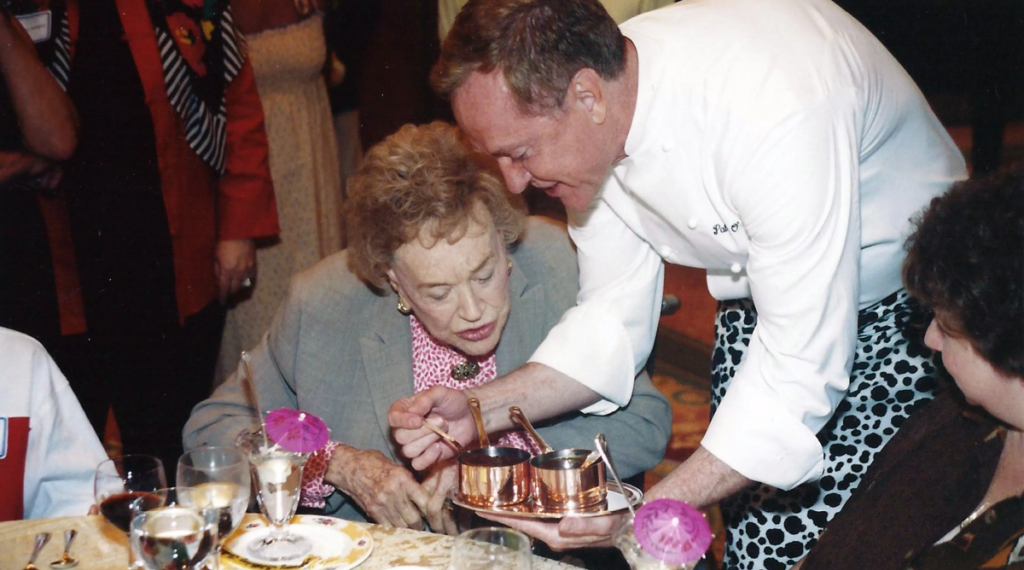
A self-taught cook, O’Connell initially encountered French cuisine not in culinary school, but through Julia Child. He worked his way through Mastering the Art of French Cooking, first following recipes precisely and, with repetition, beginning to alter them according to his own instincts and taste.
That progression – learning a tradition deeply enough to eventually make it one’s own – would become a defining characteristic of his cooking.
France itself deepened the fascination. As a young man searching for direction, O’Connell traveled through the country and encountered a culture in which food, restaurants, and the people who created them held a stature he had never experienced at home. He has recalled seeing crowds gather around pastry-shop windows and observing chefs treated with the kind of reverence Americans might reserve for athletes or performers. He was equally struck by elegant country inns, where extraordinary food could emerge from intimate establishments far from a major city.
The idea stayed with him.
When O’Connell returned to Virginia, he began cooking professionally and eventually developed a catering business with little more than a wood-burning stove and an electric frying pan. Then came an opportunity: part of an abandoned garage in Washington, Virginia, available for $200 a month.
The Inn at Little Washington was born.
O’Connell did not set out simply to reproduce French cuisine in Virginia.
Instead, he absorbed its rigor, technique, reverence for ingredients, and understanding of hospitality, then applied those ideas to the place around him. The result became a regional American cuisine informed by classical French tradition but increasingly confident in its own identity.
The Inn describes O’Connell’s approach today as one that pays homage to classical French cuisine while embracing an American cuisine that is imaginative, eclectic, evolving, and unconstrained by rigid boundaries.
His relationship with local farmers and producers became central to that identity. In rural Virginia in the late 1970s, this was initially practical: if ingredients were not readily available, relationships had to be built with the people who could grow and produce them. Over time, that necessity became part of a philosophy of cooking rooted in locality, seasonality, self-sufficiency, and stewardship.
There is a kind of cultural exchange embedded in that evolution. French culinary traditions traveled across the Atlantic, encountered a particular American landscape, and became something new.
Nearly half a century later, the modest garage has evolved into one of America’s most celebrated restaurants. O’Connell and The Inn have received six James Beard Foundation awards, including O’Connell’s 2019 Lifetime Achievement Award. The Inn became the first restaurant in the Washington, D.C. Michelin Guide to receive three stars and later received a Michelin Green Star recognizing its approach to sustainability.
His career has also carried him back across the Atlantic. Through Relais & Châteaux, O’Connell staged a dinner in Paris celebrating the coming of age of American cuisine alongside chefs including Alice Waters, Thomas Keller, Daniel Boulud, and Charlie Trotter – a fitting reversal of the journey that had inspired him decades earlier.
The student of French cuisine had become one of the chefs representing American cuisine to the world.
Hospitality as a Cultural Language
O’Connell’s contribution cannot be understood through food alone.
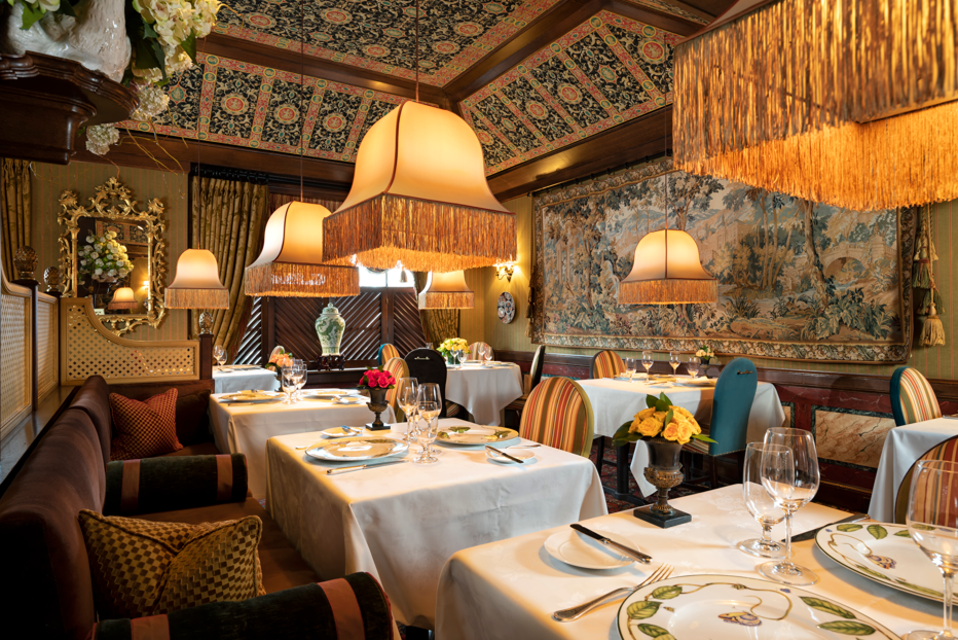
At The Inn at Little Washington, hospitality is theatrical, detailed, generous, and deeply intentional. O’Connell, who studied theater and journalism before committing fully to restaurants, has described the restaurant world as a form of living theater. His dining room extends that idea: food, interiors, service, ritual, humor, and storytelling work together to create an experience.
That understanding of hospitality also offers another way to think about cultural diplomacy.
Diplomacy does not happen only across negotiating tables or between governments. It happens through the ways cultures encounter one another – through art, literature, music, architecture, wine, food, conversation, and the rituals of gathering around a table.
O’Connell’s career has unfolded within precisely that space.
In 2007, he was invited to cook for Queen Elizabeth II during her visit to Virginia. He has represented American cuisine internationally and helped elevate the idea that American regional cooking could stand confidently alongside the great culinary traditions that had once inspired him.
Main, Middle & Gay: Looking Back
In 2026, O’Connell added another form of storytelling to his work with the publication of his first memoir, Main, Middle & Gay: A Chef Finds His Place in the World Against All Odds.
Its title comes from three streets in Washington, Virginia – Main, Middle, and Gay – but also signals the deeply personal story contained within.
O’Connell writes about growing up gay in the 1950s, his early restaurant jobs, the unconventional communities in which he found belonging, his travels through Europe, and the unpredictable path that eventually led him to an abandoned garage in rural Virginia. The book follows not simply the creation of a restaurant but the making of a life: one built through reinvention, intuition, persistence, and the discovery of a place in which O’Connell could fully become himself.
Its release was celebrated in September with appearances in Virginia and Washington, D.C., including a conversation at the Virginia Museum of History & Culture and a literary celebration presented by Politics and Prose with guests José Andrés and Tom Sietsema.
For a chef whose work has always involved storytelling through atmosphere, food, and hospitality, the memoir offers the story in his own words.
A Culinary Conversation Across the Atlantic
Patrick O’Connell’s career began, in part, with an American opening Julia Child’s volumes and teaching himself the language of French cooking.
It continued with a young traveler encountering France and seeing for the first time a culture in which cuisine could be treated as an art form – and chefs as artists.
He carried those ideas home. In a tiny Virginia town, he translated them through American ingredients, regional relationships, his own unmistakable imagination, and a philosophy of hospitality that would influence generations of cooks and diners.
Nearly five decades later, that exchange continues in the opposite direction: an American chef whose work was profoundly shaped by France returning to Paris to be recognized for what he created from that influence.
It is precisely this kind of exchange that the Lafayette-Washington Award celebrates – not the preservation of two cultures in isolation, but what becomes possible when ideas, traditions, and people move between them.
The Lafayette-Washington Award for Cultural Diplomacy
The Lafayette-Washington Award for Cultural Diplomacy was established by the French-American Cultural Foundation to recognize individuals and organizations whose work makes an extraordinary contribution to strengthening the relationship between France and the United States through cultural exchange.
Named for the Marquis de Lafayette and George Washington – two figures whose friendship has long symbolized the historic bond between the two nations – the Award recognizes a relationship that is both historic and continually evolving. Its recipients reflect the many forms that exchange can take, from the arts and scholarship to science, wine, cuisine, and other fields of cultural life.
The award was inaugurated in 2025, with ceremonies in Washington, D.C. and Paris, establishing a deliberately transatlantic tradition.
The French-American Cultural Foundation is proud to recognize Patrick O’Connell as a 2026 Lafayette-Washington Award for Cultural Diplomacy recipient and to celebrate a legacy that has transformed the American table while remaining deeply connected to the French traditions that first helped him imagine what it could become.